


By Jace Anderson
Posted in
January 30, 2025
The Rise of B2B Portals | Article
The Rise of B2B Portals in Manufacturing
In today's competitive landscape, building a robust B2B portal is essential for manufacturers to meet buyer expectations, streamline sales processes, and stay ahead of the curve in digital commerce.
At Acro Commerce and in the greater B2B ecommerce industry, we see a dramatic rise in B2B buyer portals and a move to API-driven architecture supporting those online selling features.
“65% of B2B buyers prefer to research products online, and 86% prefer to reorder online instead of through a sales rep.” - PwC, COO Manufacturing Survey.
This stat makes an excellent case for a strong online presence with robust product and service catalogues. Additionally, there is an expectation from B2B clients that their vendors provide online access to accounts, invoicing, and more.
When you factor in remote work and the difficulty sales reps have meeting buyers in person to introduce new products or services manufacturers, it becomes clear that manufacturers must adapt to digital selling tactics to replace traditional face-to-face sales.
The impact of not building B2B portals
Not meeting the new digital buying expectations:
- Lost market share to online competitors
- Weakened brand loyalty & low customer satisfaction
- Costly/inefficient sales processes
- Lost sales opportunities
The global B2C market is estimated to reach $7.65 trillion globally. In comparison, the B2B market will be nearly 3.5x it at $25.65 trillion by 2028, and yet, the technology platforms are just now able to serve these customers. It’s why we have seen firsthand that regardless of how good the platform is, the B2B experience can be vastly different from company to company and expecting one platform to handle all the unique requirements is an unlikely outcome.
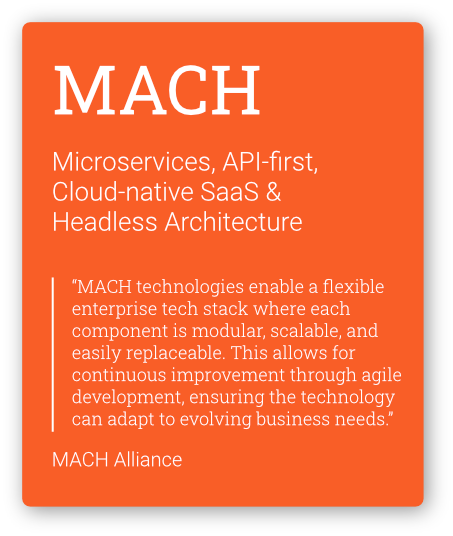
In response, these companies are moving towards MACH architecture to supplement their B2B offerings, which is why systems integrators (SIs) like Acro need to understand these platforms' limitations.
While our partners at BigCommerce have been refining their Buyer Portal experience over the last few years, Shopify recently joined the conversation. Their buyer experience portal, paired with an extensive demo site, offers many features that the market now demands from their platforms.
These leading platforms are reacting to much of the data released in the past few years, forcing innovation in these sectors. Shopify and BigCommerce cannot deny that 86% of B2B buyers prefer to reorder online instead of speaking to a sales representative, and 75% of B2B manufacturers will sell directly to their customers through these digital commerce channels by 2025.
From these platforms, we’re seeing where the priority lies as both SaaS offerings focus on a couple of main areas:
- Company Account Management — Whether viewing and reordering from other company users or managing multiple buyers across different locations, each with unique permission/payment terms, the customizability and configurability of “accounts” continue to grow. The goal isn’t to replace Account Managers or Sales Reps in the traditional model but to have a system that fits their regular activities and unique requirements.
- Customer-Specific Catalogs — Gating products and services, paired with specialized pricing for specific lists (or catalogs), is a feature of growing importance. Imagine you have Walmart as an account, which makes up 70% of your sales volume. Creating a specific catalog for Walmart buyers would be infinitely critical to retaining and simplifying their buying experience.
- Volume Pricing — a simple requirement but necessary when speaking to B2B sellers. Giving your larger clients price breaks when buying in larger quantities is simple math and something never traditionally offered in B2C.
Another commonality between BigCommerce and Shopify is headless storefronts, which allow total control over the buyer experience through API-driven architecture. Building these types of solutions is where Acro Commerce comes into play.
Ready for the future of B2B?
Free Expert Insight
Meet with one of our B2B portal experts and learn how you can
- Deliver a digital experience for your customers.
- Sell online without cannibalizing your sales team.
- Explore AI-powered CPQ tools living inside B2B systems.