


By Shae Inglis
Posted in
June 8, 2026
(P7-05) Multi-channel inventory truth in Cin7 commerce: keeping one source across DTC, wholesale, and marketplace
From The Field
Multi-channel inventory truth in Cin7 commerce
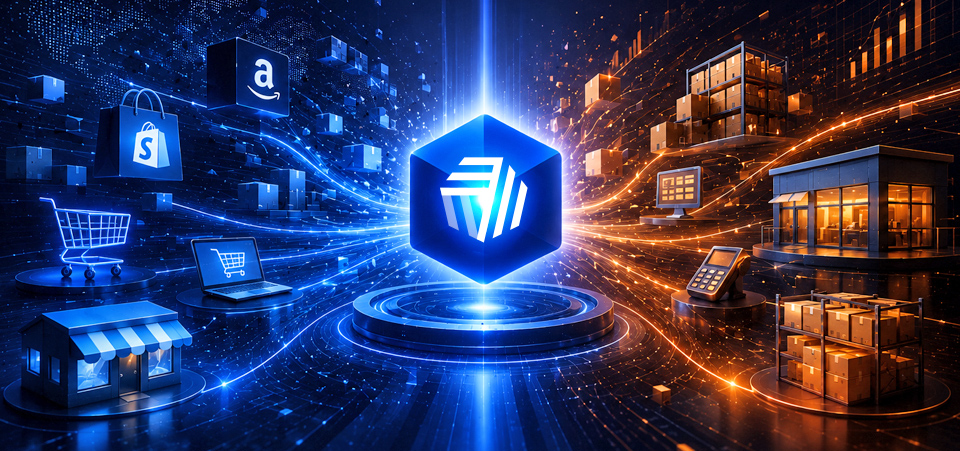
Cin7's whole reason to exist is one honest view of stock across every channel you sell through. That is also where most Cin7 commerce builds succeed or fail. When the storefront, the marketplace, and the warehouse each keep their own idea of what is in stock, you oversell, you misship, and you spend the margin you made on apologies. Keeping one source of inventory truth is an architecture decision, and it is worth making first.
Key takeaway
Cin7 should be the single system of record for stock and orders. Every channel reads from it in real time, and every order is tagged and routed to the right warehouse or third-party logistics provider. That is the difference between multichannel growth and multichannel chaos.
Why does stock accuracy decide Cin7 projects?
A full ERP centralizes a lot of the business in one system. Cin7 is more focused: it is the operational brain for inventory and orders, and its signature strength is holding one accurate stock position across DTC, wholesale, marketplaces, retail EDI, points of sale, and multiple warehouses or third-party logistics providers. That focus is exactly why product businesses choose Cin7 over a heavier ERP. It also means the inventory layer carries more of the weight, so getting it right is the build, not a detail inside it.
What does one source of truth look like in practice?
Cin7 is the system of record for stock and orders. The storefront does not keep its own master stock number; it reads live availability from Cin7 at the moment a customer views a product or checks out. Marketplaces and retail channels sync against the same position. Purchase orders and transfers update Cin7, and linked third-party logistics providers reconcile against it. The rule is simple to say and easy to break: one place owns the number, and everything else reads from it.
What goes wrong?
- Overselling and phantom stock. A channel syncs on a delay, or keeps its own count, so two customers buy the last unit. This is the most common and most damaging failure, and it is almost always a sync-architecture choice, not bad luck.
- Pricing drift. The storefront is treated as the pricing owner and slowly disagrees with Cin7, so the price in the cart, on the order, and on the invoice stop matching.
- Order-routing errors. DTC and wholesale orders are not tagged to the right warehouse or third-party logistics rules, so orders ship from the wrong place, or miss the packing and labelling a retailer requires, which turns into chargebacks.
- Middleware sprawl. Each new channel is bolted on with its own point-to-point connection until no one can see the whole flow, and every change risks breaking something invisible.
How do you architect against it?
Make Cin7 authoritative and keep the sync as close to real time as each channel allows, reading availability instead of pushing a cached number. Tag every order with its channel and let Cin7 apply the routing, packing, and labelling rules for that channel. Keep pricing logic where it belongs so the storefront renders the price instead of inventing it. And when the number of channels and rules outgrows point-to-point connectors, move to a middleware layer or a decoupled architecture with one clear integration to Cin7, instead of a web of links. The comparison guide covers when to make that move.
This is also the readiness question that matters most before launch, which is why it leads the the Cin7 ecosystem hub. Inventory truth has to be designed for up front, because retrofitting it after go-live means unpicking every channel that already trusts its own number.
Selling across channels and not sure your stock is honest?
Run your site through Celeste, Acro's architecture diagnostic. It flags the inventory and integration gaps that cause overselling before they reach your customers.
Related Articles
Cin7 commerce: how to architect commerce on Cin7
- Field analysis: Moving from NetSuite to Cin7: what you keep and what you give up
- Comparison guide: When Cin7's native connector is enough, and when you extend it
- Framework for partners: How Cin7 implementation partners qualify a commerce opportunity
- From the field: Multi-channel inventory truth in Cin7 commerce
- Framework: Scoping a Cin7 project: who does what
- Field analysis: Cin7 without a storefront: middleware and operations-only builds
Frequently Asked Questions
Make Cin7 the single system of record for stock and orders, and have every channel read live availability from it instead of keeping its own count. Tag each order with its channel so Cin7 routes it to the right warehouse or third-party logistics provider with the correct packing and labelling.
Almost always because a channel syncs on a delay or keeps its own stock number instead of reading Cin7 in real time. Two customers then buy the last unit. It is a sync-architecture choice, not bad luck, and it is fixed by making Cin7 authoritative and reading availability at the moment of sale.
It carries more of the weight on Cin7, yes. A full ERP centralizes more of the business, while Cin7 is focused on being the operational brain for inventory and orders. That focus is why product businesses choose it, and it is why the inventory layer is the make-or-break part of a Cin7 commerce build.
Every order is tagged with its channel in Cin7, and Cin7 applies the routing, packing, and labelling rules for that channel. A DTC order and a wholesale or EDI order have different fulfilment paths, and letting Cin7 own that logic prevents the misships and chargebacks that come from routing by hand.
When the number of channels and rules grows past what you can see and maintain. Each new bolt-on connection adds hidden risk. At that point a middleware layer or a decoupled architecture with one clear integration to Cin7 is more reliable than a web of point-to-point links.
With the source that owns it, not scattered across channels. The storefront should render the price, never invent it, so the price in the cart, on the order, and on the invoice always agree. Pricing drift across channels is a trust problem that compounds quietly.
Next Step
Get the foundation right before you build.
For readers who know their ERP and commerce platform and need a native-vs-middleware verdict.